Analog ↔ Digital: Choosing What You Depend On
This isn’t about one being better than the other.
And it’s not about rejecting modern tools.
It’s about dependency.
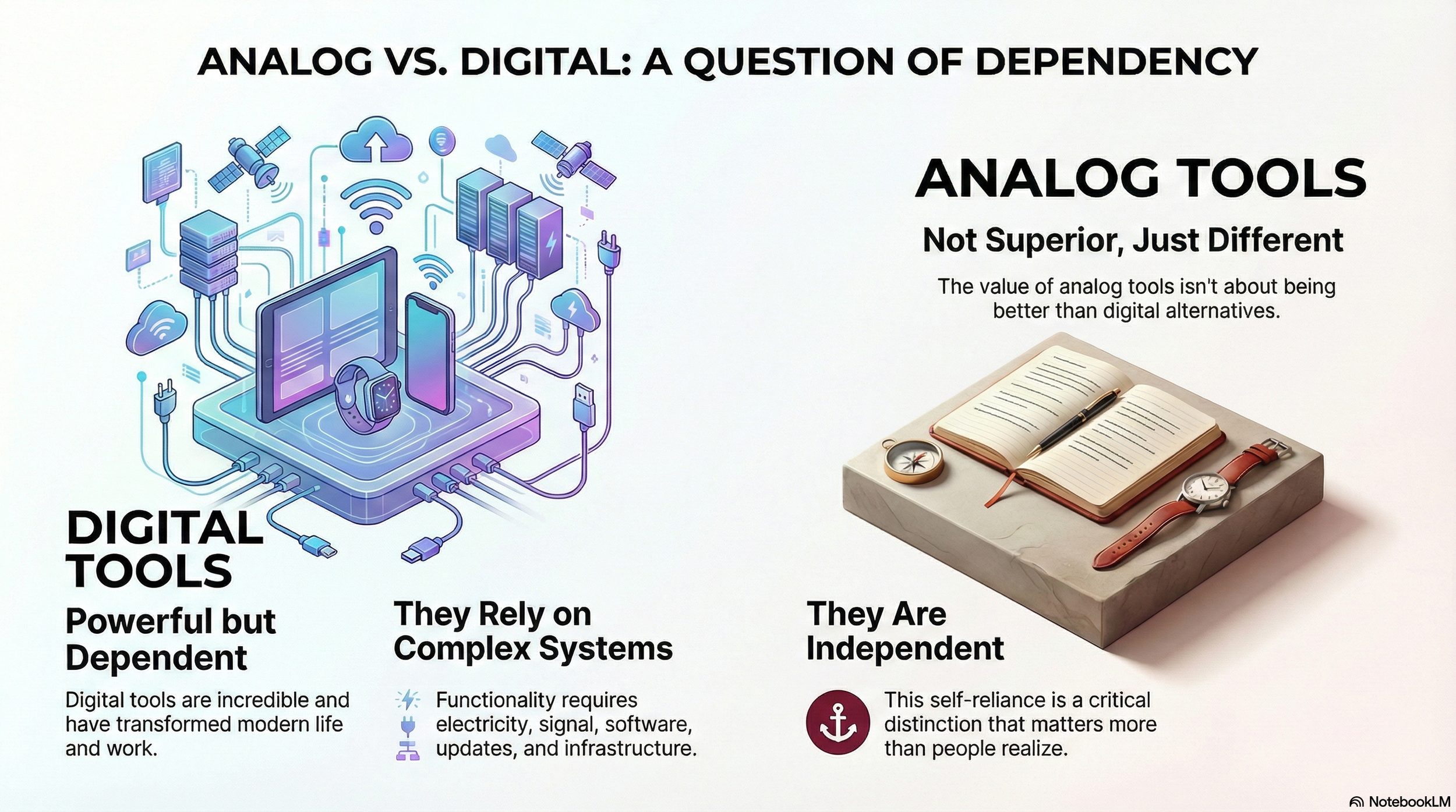
Digital tools are incredible.
They’ve changed how we work, communicate, navigate, and think.
But when everything you rely on requires:
electricity
signal
software
updates
infrastructure
You’re not just using tools — you’re dependent on systems.
Analog tools aren’t superior.
They’re independent.
And that difference matters more than people realize.
Analog Vs. Digital: A Question Of Dependency
Digital Is Powerful — and Fragile
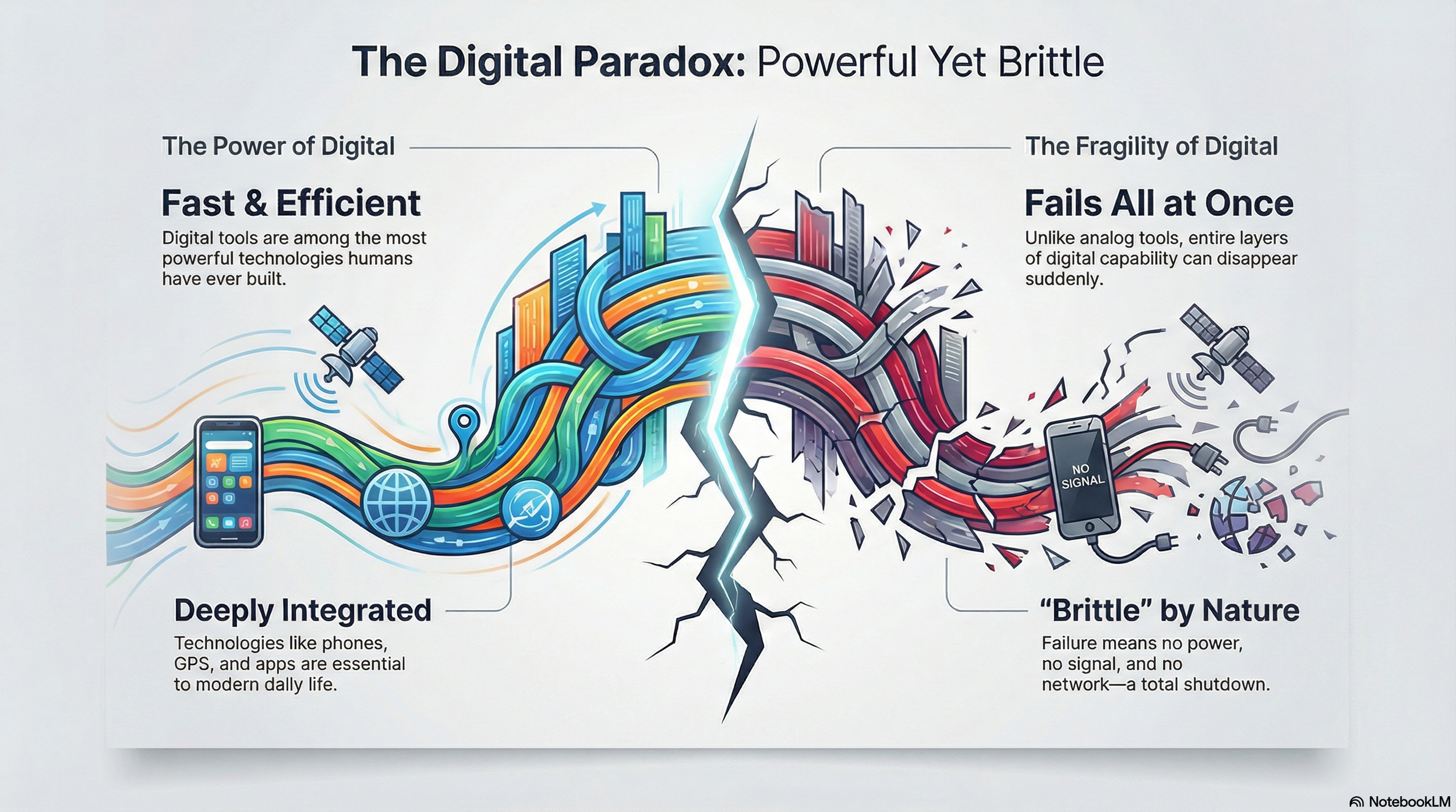
Phones, GPS, cloud storage, cellular networks, apps, batteries — these are some of the most powerful tools humans have ever built.
They’re fast.
They’re efficient.
They’re deeply integrated into daily life.
But they share a common trait:
They fail all at once.
No power.
No signal.
No network.
No updates.
Suddenly, entire layers of capability disappear.
That doesn’t make digital bad — it just makes it brittle.
The Digital Paradox: Powerful Yet Brittle
Analog Is Limited — and Reliable
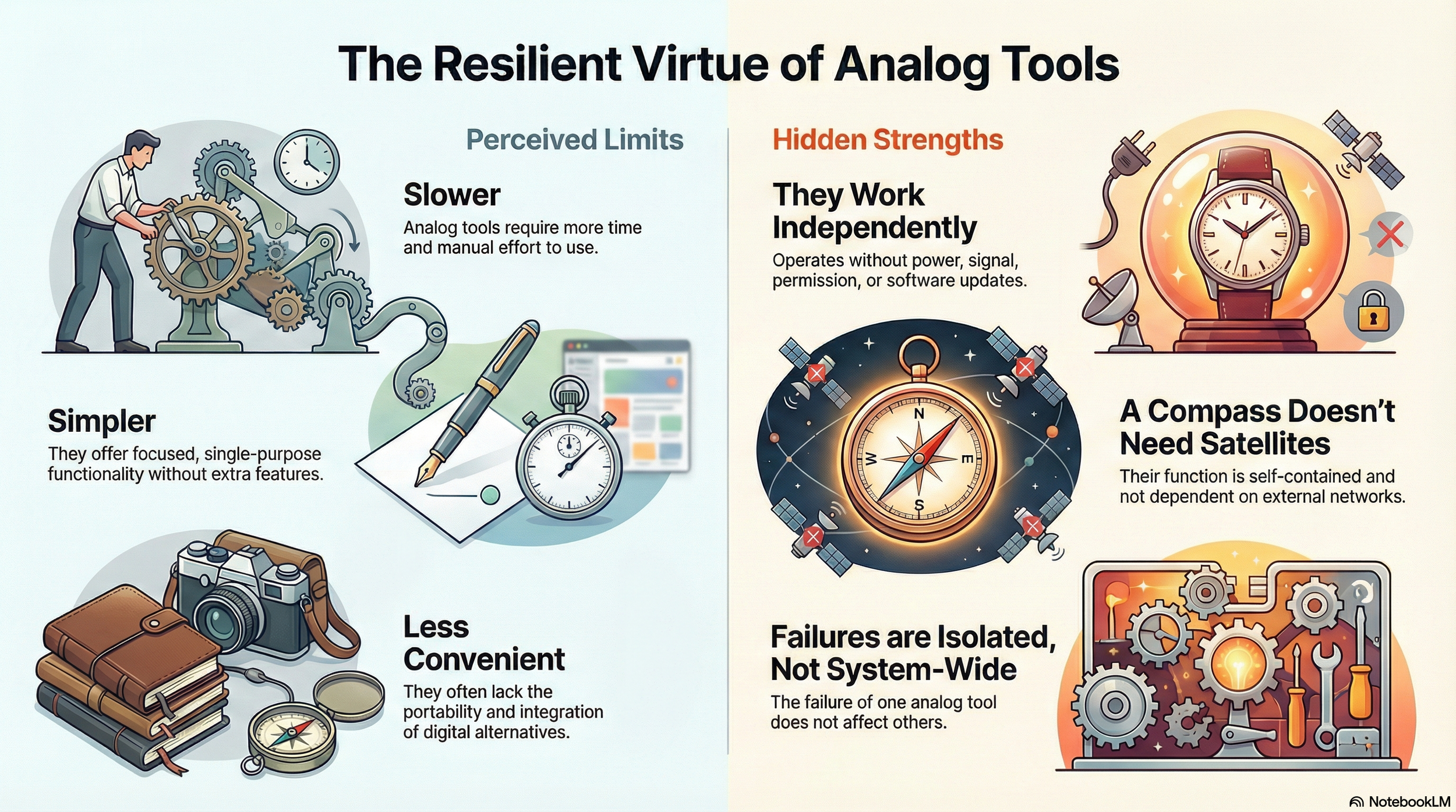
Analog tools are slower.
They’re simpler.
They’re often less convenient.
But they work:
without power
without signal
without permission
without updates
A paper map doesn’t need a tower.
A notebook doesn’t crash.
A compass doesn’t care about satellites.
Analog tools fail individually, not system-wide.
That’s their strength.
The Resilient Virtue Of Analog Tools
Communication: Digital First, Analog Backup
Cellular communication is unmatched — until it isn’t.
Mesh radios, simple radios, and direct device-to-device systems don’t replace phones — they catch you when phones stop working.
The point isn’t to abandon cellular networks.
The point is to avoid being helpless without them.
Redundancy isn’t paranoia.
It’s good engineering.
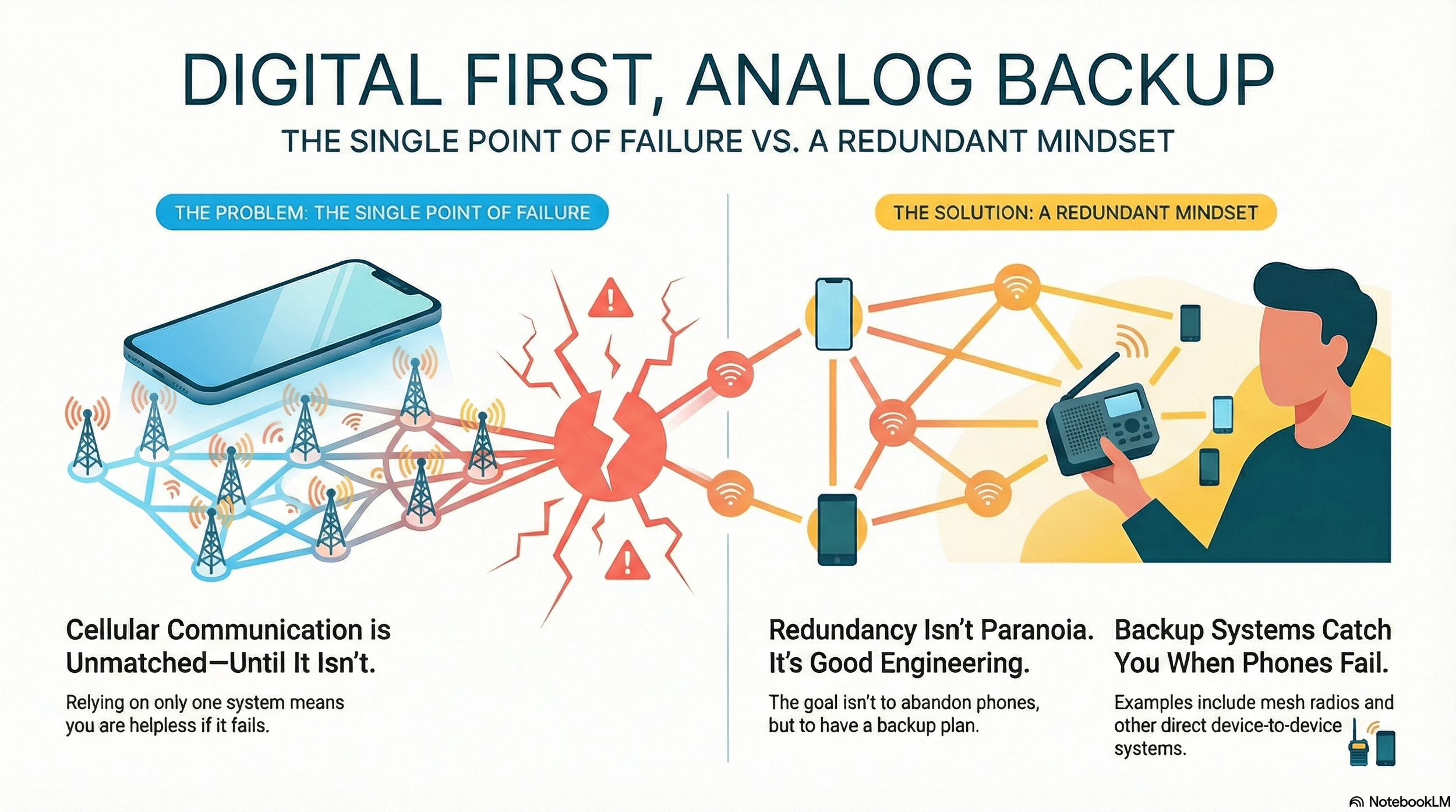
Digital First, Analog Back Up
Navigation: Convenience vs Awareness
GPS is extraordinary.
It gets you everywhere — fast.
But it also:
reduces spatial awareness
discourages route understanding
encourages shallow engagement with terrain
Paper maps, basic navigation skills, and situational awareness do the opposite.
They slow you down — and reconnect you to the land.
You don’t need to choose one forever.
You need to be capable of both.
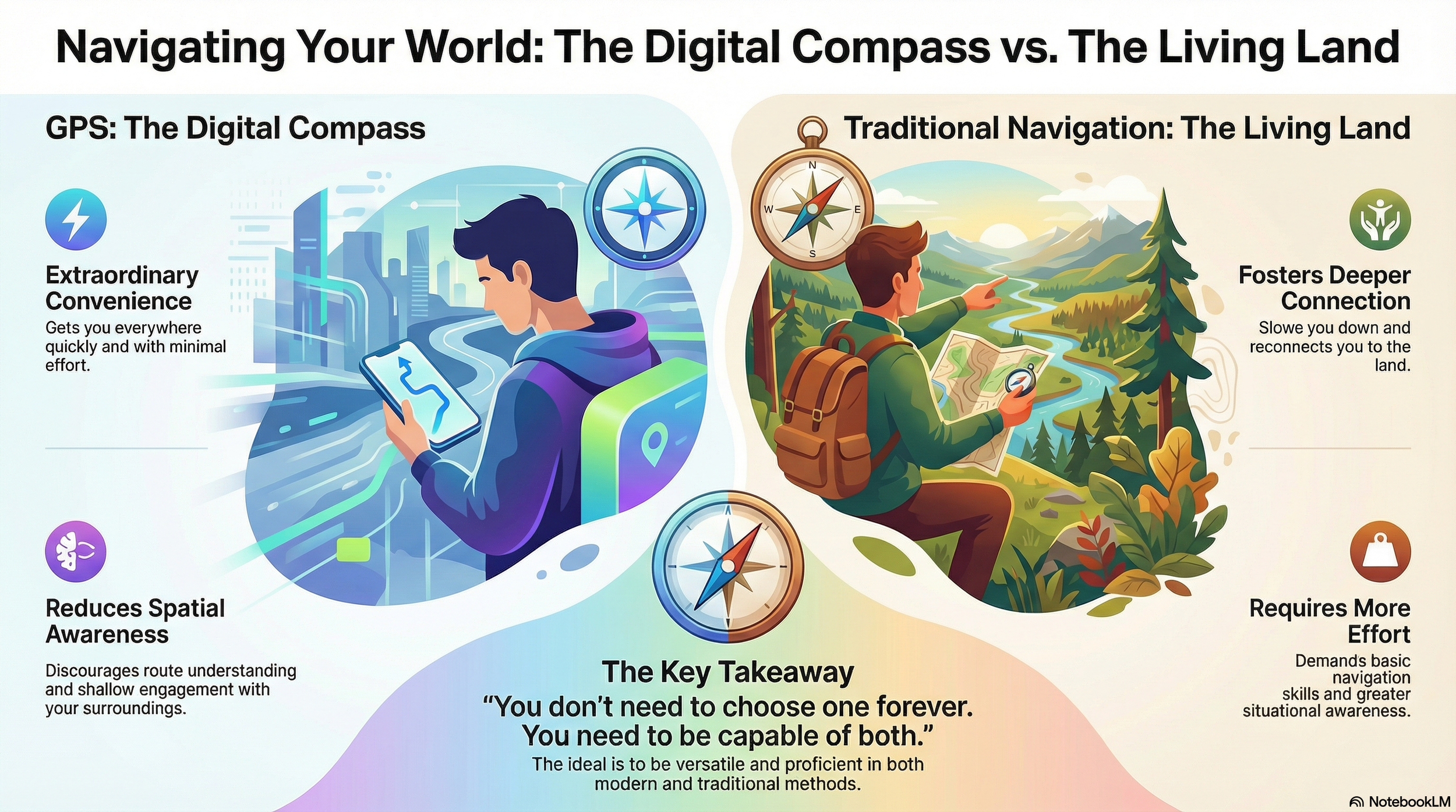
Tools: What Works Now vs What Works Always
Some tools are digital by nature.
Some are mechanical.
An axe doesn’t replace a chainsaw.
A chainsaw doesn’t replace an axe.
One is fast.
One is patient.
One needs fuel.
One needs effort.
Sometimes you want speed.
Sometimes you want certainty.
Analog tools don’t care about:
batteries
EMPs
dead chargers
broken starters
They trade efficiency for reliability.
That’s not primitive.
That’s intentional.
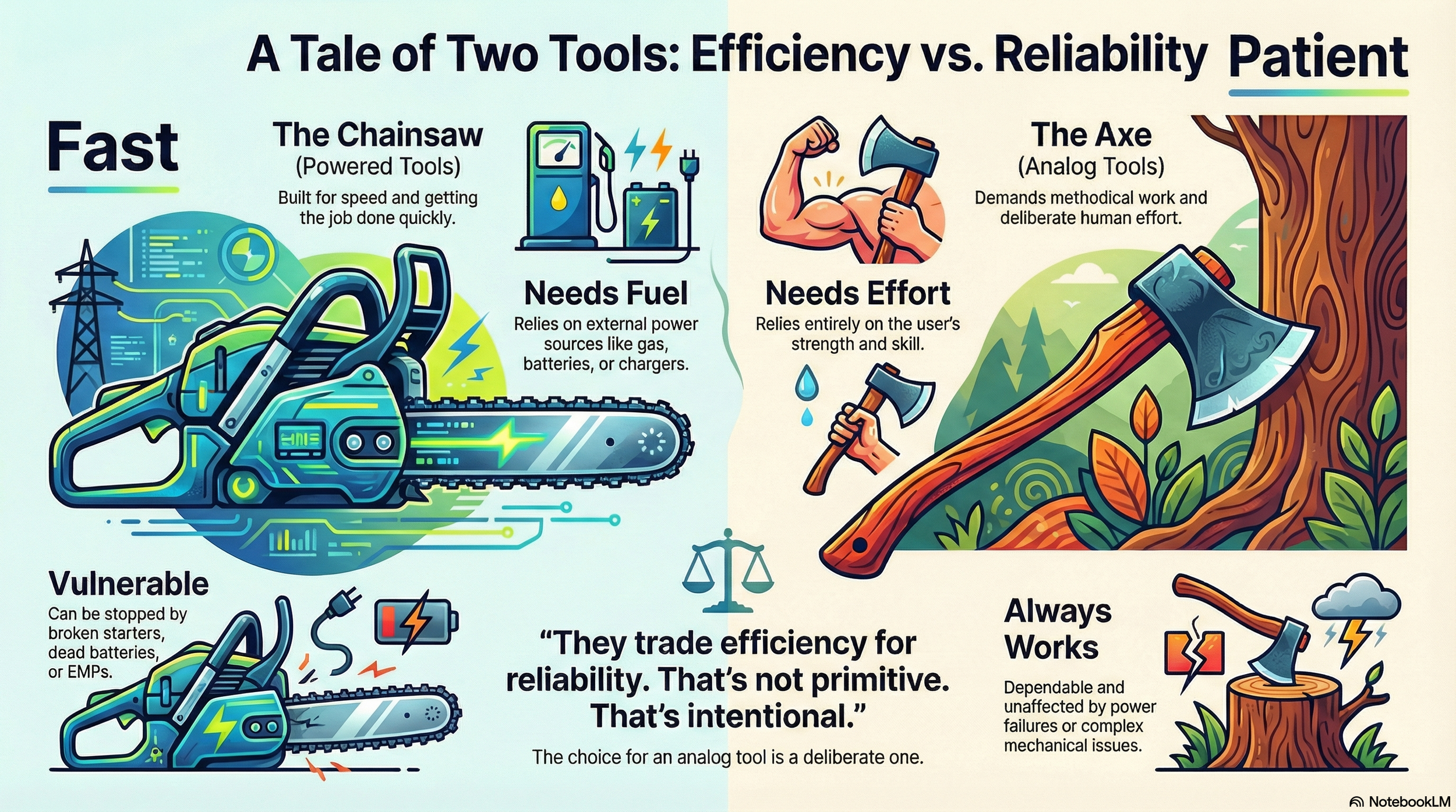
The Problem With Total Dependence
When all your systems are digital:
you hesitate to go deeper into the woods
you stay closer to signal
you avoid longer disconnection
you feel uneasy without power
Not because you can’t handle it —
but because your tools can’t.
That’s a subtle form of constraint.
And most people never notice it happening.
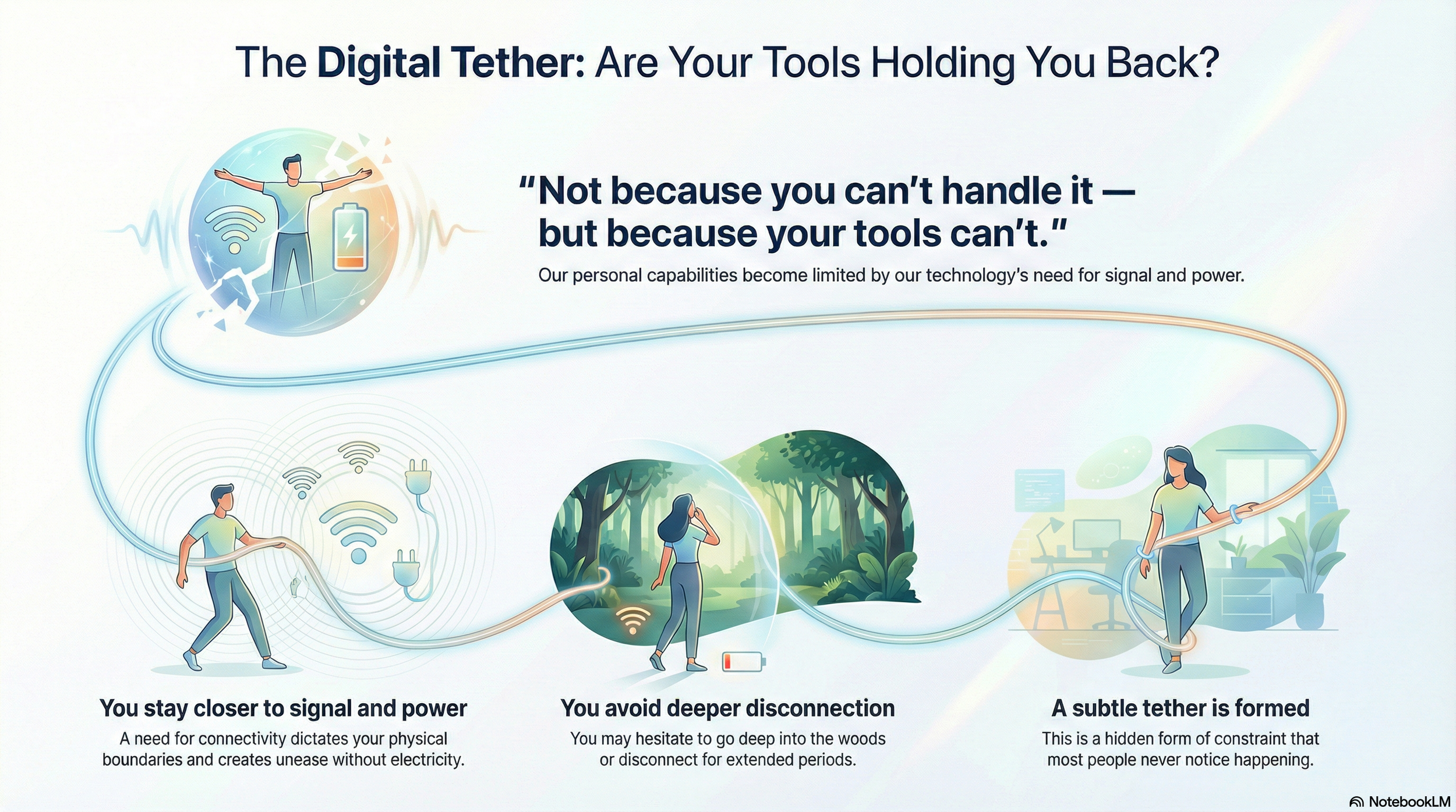
The Digital Tether: Are Your Tools Holding You Back?
Short-Term Analog Living Is Healthy
You don’t need to live analog forever.
But being able to:
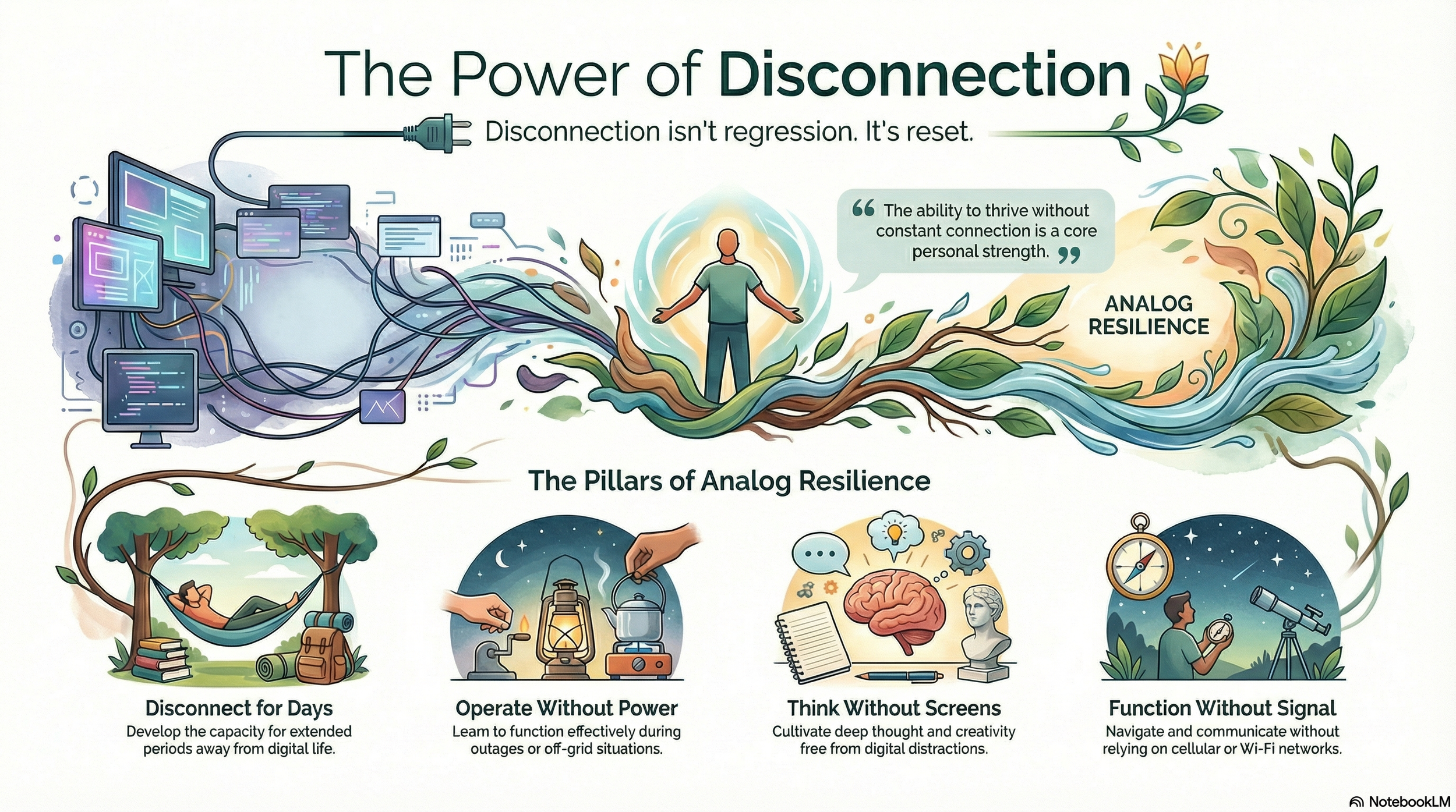
disconnect for days
operate without power
think without screens
function without signal
…is a form of personal resilience.
Sometimes it’s necessary.
Sometimes it’s restorative.
Sometimes it’s the point.
Disconnection isn’t regression.
It’s reset.
Analog and Digital Are Partners, Not Enemies
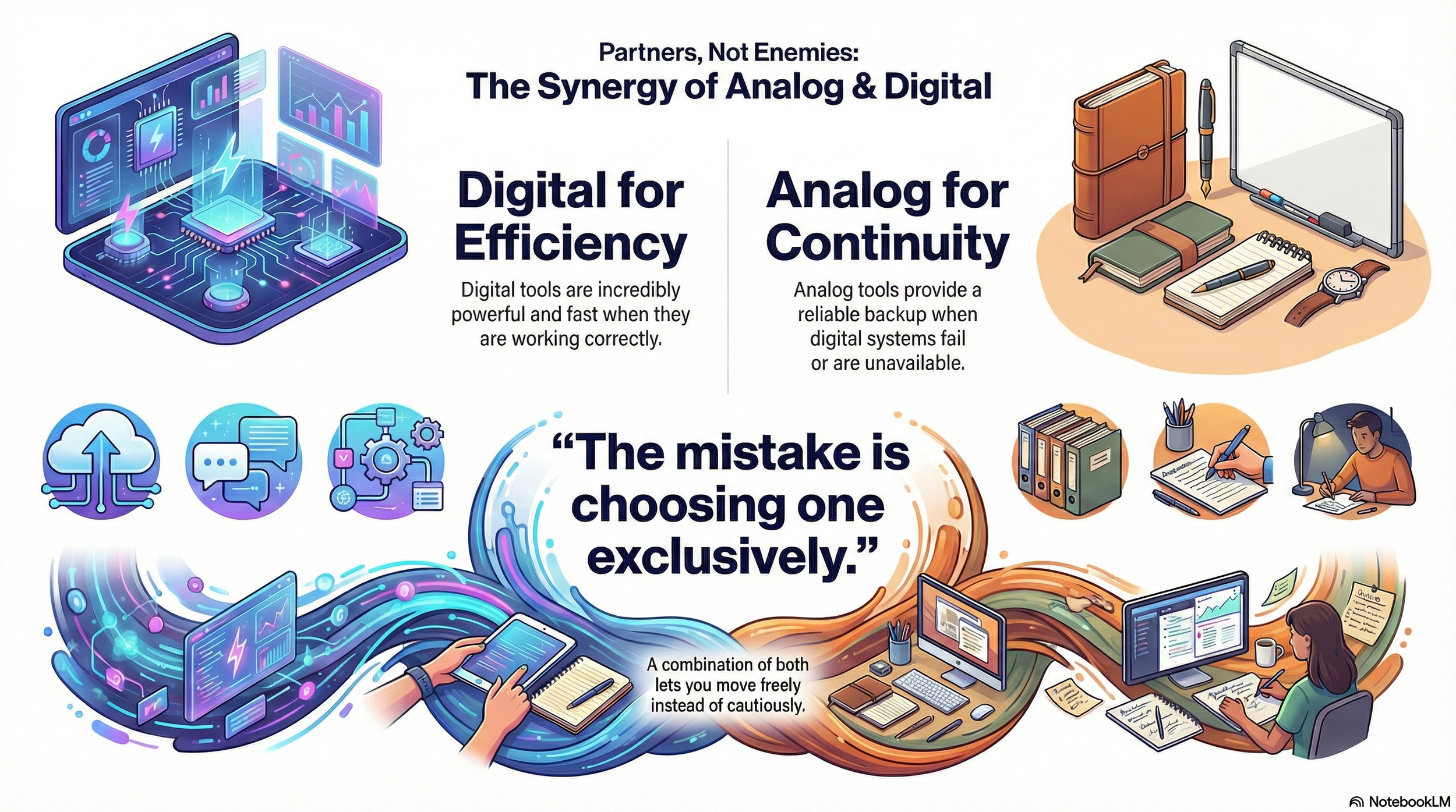
Digital tools are incredible when they work.
Analog tools are there when they don’t.
The mistake is choosing one exclusively.
The stronger position is:
digital for efficiency
analog for continuity
That combination lets you move freely instead of cautiously.
The Real Question
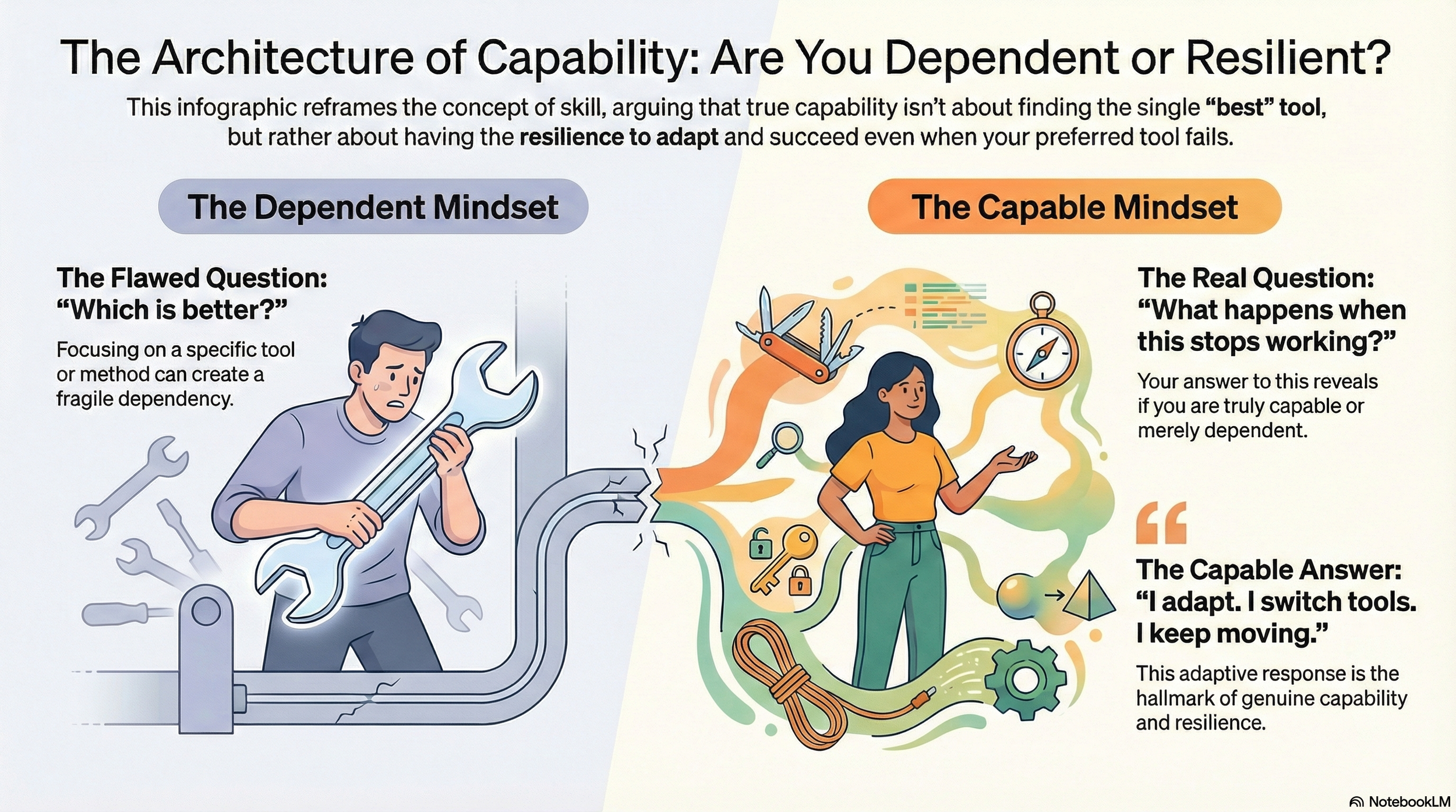
The real question isn’t: “Which is better?”
It’s: “What happens when this stops working?”
If the answer is:
“I adapt”
“I switch tools”
“I keep moving”
You’re not dependent.
You’re capable.
Closing Thought
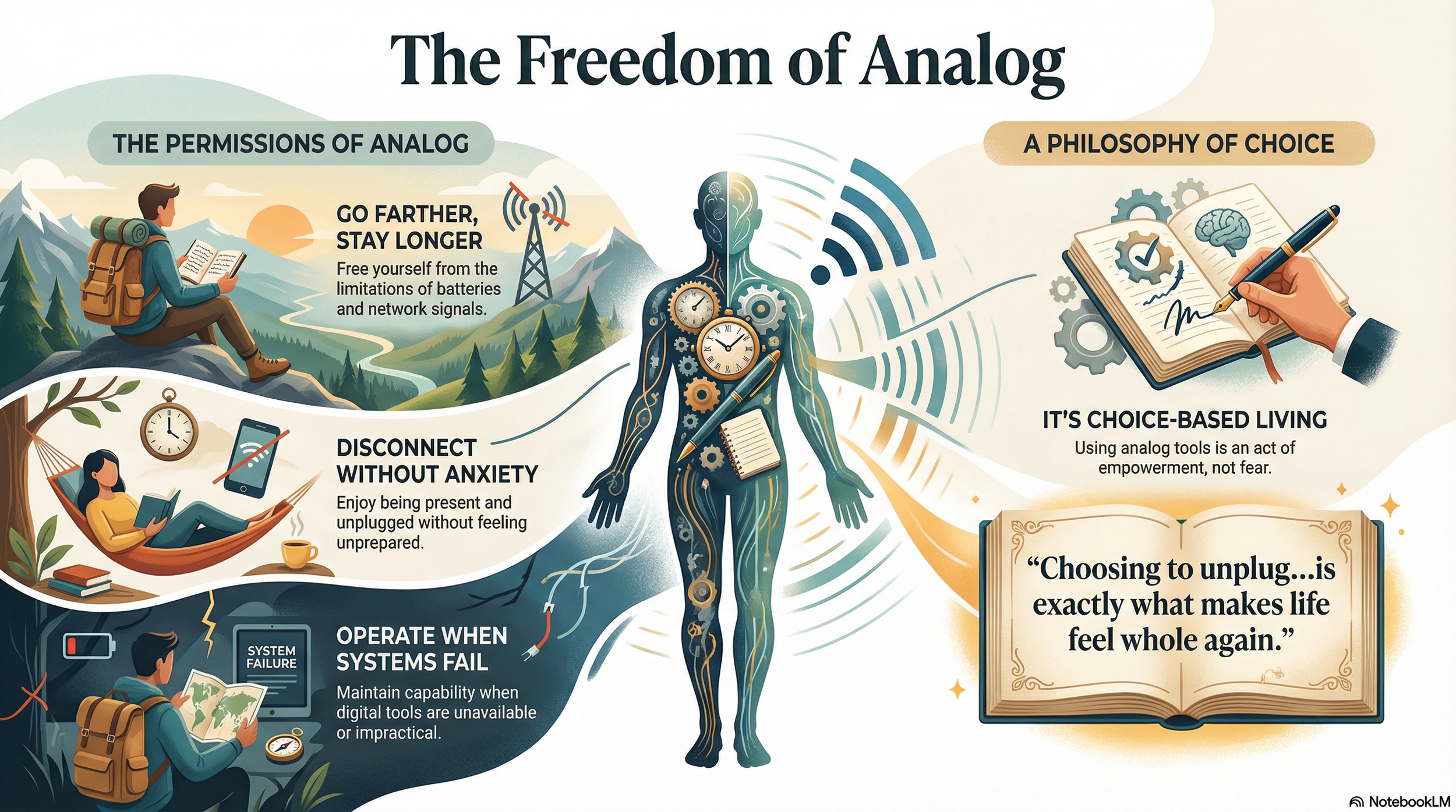
Analog tools don’t replace modern life.
They support it.
They give you permission to:
go farther
stay longer
disconnect without anxiety
operate when systems fail — or simply aren’t present
That isn’t fear-based living.
It’s choice-based living.
And sometimes, choosing to unplug — even briefly — is exactly what makes life feel whole again.